One of the most important ways to care for the teeth is a thorough, deep cleaning of calculus by a qualified dental hygienist. What is this procedure, when is it carried out and for whom? Here is the information you need to know to keep a beautiful smile for a long time:
Dental hygienist services in Ashdod
One of the most important ways to care for the teeth is a thorough, deep cleaning of calculus by a qualified dental hygienist. What is this procedure, when is it carried out and for whom? Here is the information you need to know to keep a beautiful smile for a long time:
What procedures does a dental hygienist perform?
Throughout the day, food residue gets stuck in the mouth and causes a build-up of sugar, starch and other harmful substances between the teeth. There are always bacteria in the mouth that feed on these substances, and this causes tooth decay and the formation of calculus on the teeth. Brushing the teeth and using various aids can help remove some of the harmful residue, but a deeper cleaning of calculus and fighting decay requires a more thorough and careful cleaning.
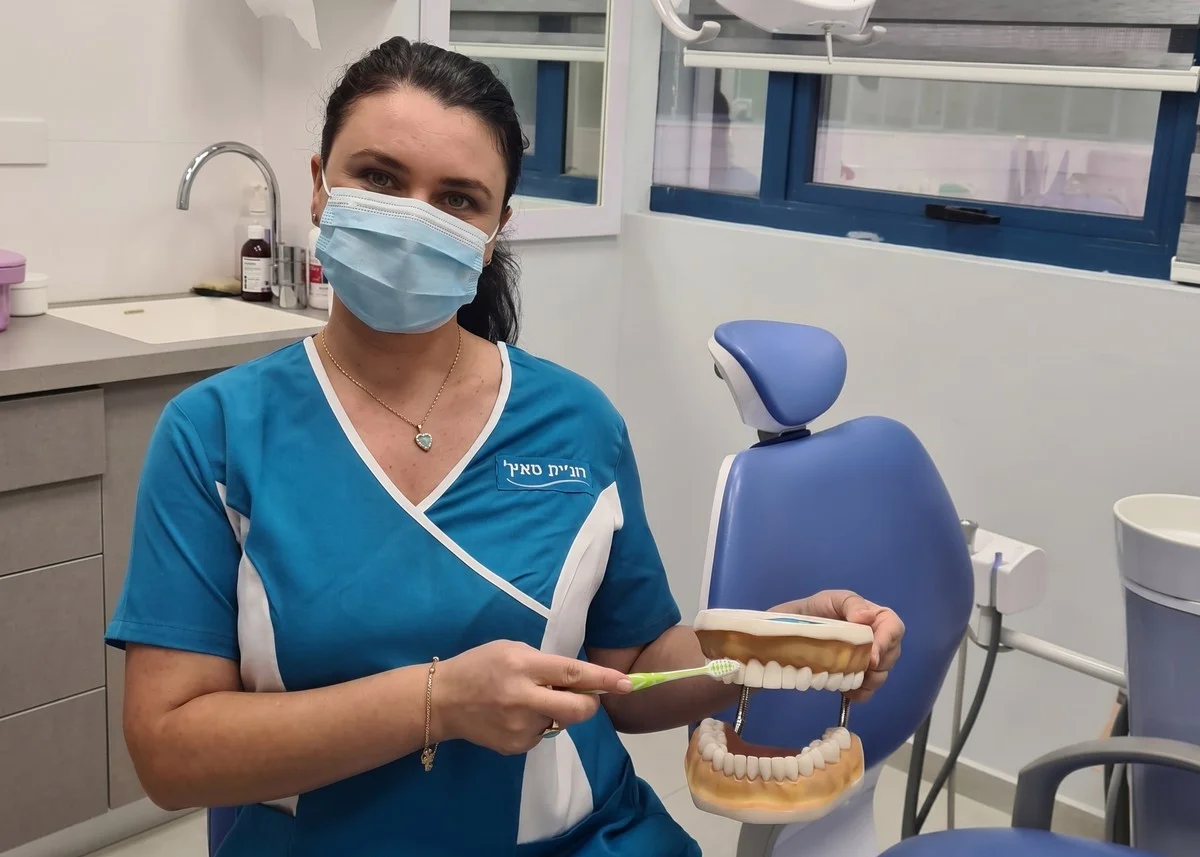
The dental hygienist uses special, effective tools to remove calculus, stains and deposits from the teeth. The procedure carried out by the hygienist not only helps maintain oral health and prevent tooth loss, but can also reduce gum inflammation, eliminate bad breath and make your smile more attractive. In addition, at each appointment with the hygienist you receive instructions on how to care properly for your teeth and gums, suited to the condition of your mouth, so that after the visit you can continue caring for your teeth and gums on your own.
Usually the procedure carried out by a dental hygienist lasts from ten to twenty minutes; it is performed without anaesthesia or sedation and does not cause pain, though temporary discomfort is possible. If the patient is found to have inflammation or a more serious gum disease, the dental hygienist may apply local anaesthesia to reduce pain, or refer the patient to a dentist or periodontist for diagnosis and treatment. In this way the treatment really helps to "keep a finger on the pulse" so that the appearance or progression of oral-health problems is not missed.
How often should you visit a dental hygienist?
Some people never visit a dental hygienist and come to the dental clinic only when it is too late. Nevertheless, all specialists know that the best cure for any health problem is prevention, so it is strongly recommended to visit the hygienist — especially if we feel that everything is "fine" with our mouth.
The general recommendation for the whole population is to have a hygienist procedure once every three to nine months. For anyone who suffers from gum inflammation, or knows they are prone to such inflammation, it is recommended to increase the frequency of visits.
Maintaining oral health beyond the walls of the clinic
A cleaning procedure at a dental hygienist is only one component of maintaining oral health. After the procedure it is very important not to forget to care for your teeth and to take responsibility for maintaining your own health.
This means it is extremely important to brush your teeth at least twice a day, clean between the teeth with special interdental brushes or dental floss, and rinse your mouth with the liquids recommended by your hygienist according to the condition of your mouth.