
How much does the implant procedure cost?
Dental implantation is a procedure whose cost is hard to estimate before the condition of the patient's mouth has been examined. Usually, the exact cost of the procedure is determined individually after the doctor's examination. Sometimes additional steps are required — bone augmentation, a sinus lift or gum grafting — which increases the cost of the procedure. Full-mouth rehabilitation is, without doubt, a more complex treatment whose exact cost is calculated individually according to the treatment plan.
What materials are used to place dental implants?
To carry out successful implantation, our clinic uses exclusively premium Swiss Straumann implants. They are recognised as the gold standard in world dentistry and provide the highest osseointegration rate. On this reliable foundation we place an aesthetic crown made of high-quality zirconia or porcelain.
How is implantation performed and how long does the whole process take?
It is important to remember that dental implantation is a lengthy process that requires patience. The first stage of this process is diagnostics — we perform a CT scan to assess the current condition of your mouth. The scan helps to assess the condition of the gums and jawbones in the area where the implant will be placed. These small bones support a person's teeth and are needed for the implant to integrate. When a tooth is missing, these bones are often absorbed by the body. In such a situation, an additional step will be needed — bone augmentation. The most complex surgical stages and the solving of serious bone-deficiency problems are overseen by Dr. Guy Sharon, drawing on his 25 years of international experience in Israel and the UK.
Using the "computer-guided implantation" system, the doctor prepares an implant model with software based on a three-dimensional computer model of the patient's mouth. The resulting implant images are sent for fabrication to a specialised laboratory, ensuring the best possible fit between the restorative teeth and the mouth. This method helps to save time and increase the efficiency of the implant procedure.
You will then be scheduled for the implant procedure, which is carried out in two stages. In the first stage, an implant (screw) is placed into the jaw where the tooth is missing. A temporary crown is fitted onto the screw and is later replaced with a permanent one. This is because, after implantation, time may be needed for healing so the implant can integrate into the mouth. The waiting time is essential to achieving success.
After a few weeks we will invite you to the clinic for the final stage of implantation — fitting the permanent crown. It is important to understand that sometimes this stage takes several sessions to ensure the crown fits optimally with the rest of the teeth and matches the mouth. Patience at every stage ensures the quality of the placed tooth and long-term results.
How should you behave after the implant procedure?
It is not advisable to eat for a few hours after the placement, and when you do start eating, eat only soft foods that do not require significant chewing. In the first days after the procedure it is advisable to eat only soft, room-temperature food so as not to overload the implants.
During these days you should avoid any physical exertion, including sports, lifting small children, and so on. You need to give your body rest to go through the recovery process and ensure good integration of the implant.
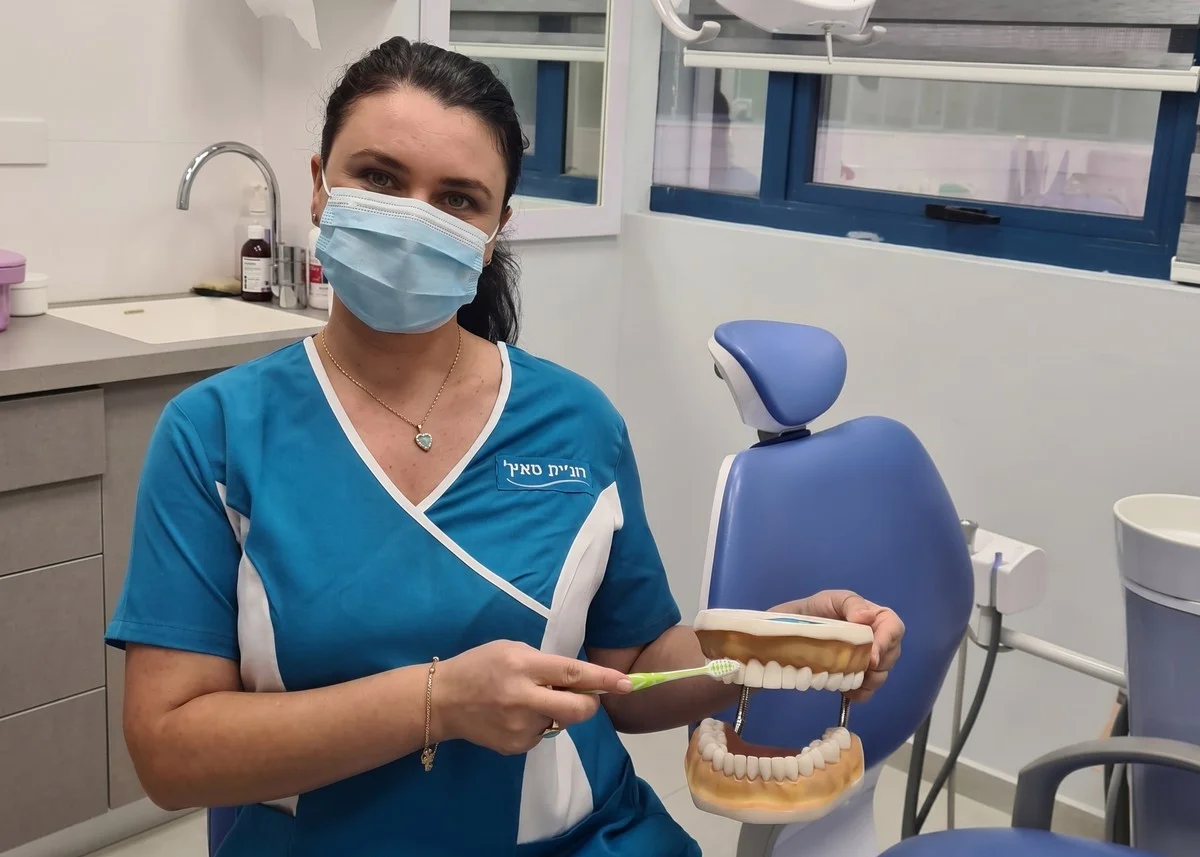
Maintaining oral hygiene is another important component that will contribute to the success of the process and keep the implants in place for decades. Be sure to brush your teeth as instructed by the doctor, and carry out the other oral-hygiene measures — cleaning between the teeth with dental floss and deep cleaning at a dental hygienist. Don't forget to come to the clinic for check-ups at the scheduled times to verify the implants have integrated, and later come for periodic check-ups every six months.
It is important to understand that caring for the implant is only the first — though most important — step on the path to a more attractive, aesthetic smile. The more responsibility you take and the more you care for the health of your teeth, the greater the chance that the implants will last for a long time.